

Professional Garden Fencing supplier for Durable Security Systems
Selecting the right infrastructure for perimeter security often comes down to a balance between tensile strength and environmental resilience. Whether for agricultural boundaries or residential landscaping, the structural integrity of the support system determines the longevity of the entire installation.
In the current market, the shift toward high-zinc coatings and specialized steel alloys has redefined how professionals approach fence stability. The challenge for most buyers is no longer just finding a material that fits, but identifying a Garden Fencing supplier capable of providing consistent gauge thickness and corrosion resistance across large-scale orders.
This analysis examines the technical specifications of modern support systems, focusing on the critical role of studded T-posts and wire mesh integration in creating secure, low-maintenance barriers.

Structural Foundations of Modern Fencing

Metal fencing has evolved from simple boundary markers to engineered security systems. The core of any stable fence lies in the interaction between the vertical supports and the horizontal wire tension. Without precise alignment and high-strength anchoring, fences are prone to sagging and structural failure under environmental stress.
Industry standards now emphasize the use of carbon steel with specific alloy additives to prevent bending. For instance, Dingzhou Huaxin Metals Products Co., Ltd. utilizes a specialized production process that ensures consistent weight per foot, which is critical for maintaining a linear tension across long spans of agricultural or residential land.
Technical Engineering of Studded T-Posts
Studded T-posts are designed to solve the problem of wire slippage. Unlike smooth posts, the "studs" or protrusions act as mechanical locks for the wire, allowing the installer to adjust the height of the fencing material and lock it into place without the need for extensive tying or specialized clips. This design significantly reduces labor time and improves the fence's resistance to lateral pressure.
The geometry of the post—a T-shaped cross-section—provides a high strength-to-weight ratio. By distributing the load across the flange of the "T," the post resists buckling more effectively than a circular pipe of the same weight. Furthermore, the addition of an anchor plate (spade) at the bottom ensures that the post remains embedded in the soil, preventing "frost heave" or wind-induced displacement.
Material selection typically ranges from common carbon steel to imitation rail steel, depending on the required rigidity. The precision of the studs is also critical; poorly formed studs can lead to wire fatigue and eventually break the fence line under the weight of livestock or accumulated snow.
The Role of Surface Treatment in Lifespan
The primary enemy of metal fencing is oxidation. In humid or coastal environments, untreated steel can degrade within a few seasons. To combat this, modern manufacturers employ a combination of galvanization and polymer coatings to create a multi-layered shield.
Corrosion resistance is not a binary feature but a scale of thickness. Hot-dip galvanizing provides a thicker, more durable zinc layer compared to electro-galvanizing, making it the preferred choice for industrial and high-security perimeters where maintenance intervals must be maximized.
Beyond zinc, the application of powder coatings in colors like Green, Green-Cream, or Orange serves a dual purpose: aesthetic integration with the landscape and an additional barrier against moisture. When these coatings are applied over a galvanized base, the resulting "duplex system" offers a synergistic effect that lasts significantly longer than either treatment alone.
Performance Index by Duty Grade
Not all fencing environments require the same level of support. Selecting a post that is too light leads to failure, while over-specifying leads to unnecessary costs. The industry categorizes T-posts into Light, Heavy, and Special Duty grades based on their weight per foot, which directly correlates to their load-bearing capacity.
Light duty posts are sufficient for garden boundaries and light livestock, whereas Special Duty posts are engineered for high-pressure environments, such as heavy cattle pens or security zones where the fence must withstand significant impact.
Figure 2. Relative Stability Index by Post Grade
Application Scenarios and Load Requirements
In a typical agricultural setting, such as a vineyard or livestock enclosure, the focus is on cost-efficiency and rapid deployment. Here, 10ft T-posts provide the necessary height to deter animals while remaining easy to drive into the ground. The use of a "little spade" with two or three holes allows for quick installation in softer soils, ensuring the fence line remains taut across uneven terrain.
Conversely, in industrial or high-security perimeters, the requirements shift toward intruder deterrence. In these cases, T-posts are often paired with Razor Barbed Wire or heavy-duty wire mesh products. The posts must be Special Duty grade to handle the increased weight of the mesh and the tension required to prevent the fence from being breached or pulled down.
Evolution of Wire Mesh Integration
The synergy between the post and the mesh is where the actual security is created. Traditionally, wire netting was loosely attached to posts, leading to gaps. Modern systems use precise mesh weaving and twisting techniques to ensure the material does not stretch or distort over time.
Companies like Dingzhou Huaxin have integrated the production of both the wire and the posts, which allows for a "system-based" approach. By matching the tensile strength of the wire mesh to the weight grade of the T-post, manufacturers can guarantee a specific load capacity for the entire system, reducing the risk of catastrophic failure.
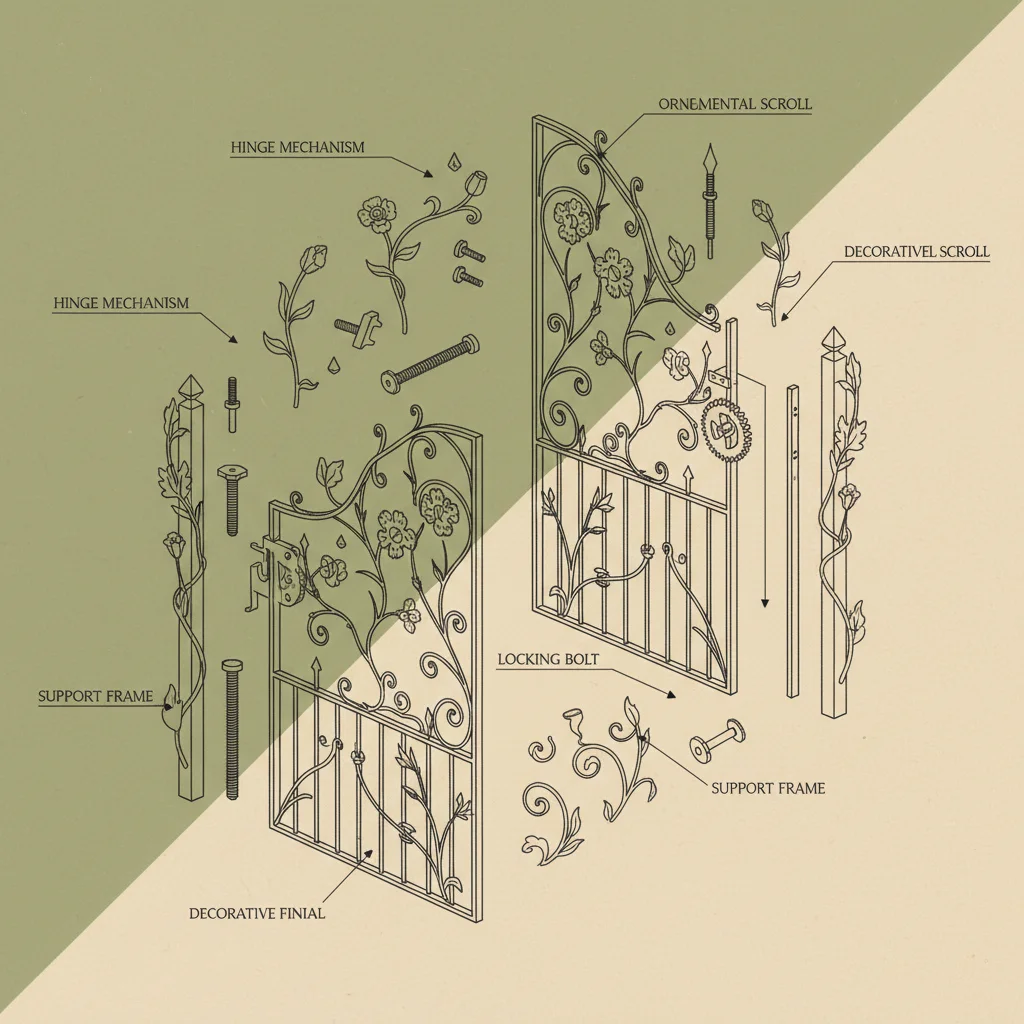
Furthermore, the introduction of landscape support stakes and decorative fence gates has expanded the use of metal fencing into high-end residential projects. This requires a transition from purely functional galvanized finishes to more refined, aesthetic coatings that do not sacrifice the underlying corrosion resistance.
Comparative Selection Framework
Choosing a support system requires an analysis of the environmental stressors and the intended use of the barrier. A failure to match the post grade to the application often results in "leaning" fences that require constant manual correction.
Buyers should evaluate the weight per foot (lbs/ft) as the primary metric for strength. For example, a jump from 1.10 lbs/ft (Light Duty) to 1.5 lbs/ft (Special Duty) provides a significant increase in lateral resistance, which is essential for boundary lines exposed to high winds or heavy livestock.
The following framework provides a relative suitability guide for different post configurations based on typical industry requirements.
| Duty Grade | Weight Range | Primary Application | Recommended Spade |
|---|---|---|---|
| Light Duty | 0.95--1.10 lbs/ft | Garden / Small Animal | Little Spade (2-hole) |
| Heavy Duty | 1.25-1.33 lbs/ft | Agricultural / Livestock | Square Spade (3-hole) |
| Special Duty | 1.5 lbs/ft | Industrial / Security | Large Spade (3-hole) |
| Carbon Steel | Standard | General Purpose | Standard Square |
| Rail Steel | High Rigidity | High-Stress Boundaries | Reinforced Large |
| Custom / Mixed | Variable | Specialized Projects | Customized |
Questions & Answers
The primary difference lies in the weight per foot and the resulting load-bearing capacity. Light Duty posts (0.95--1.10 lbs/ft) are designed for low-impact environments like gardens or small animal enclosures. Special Duty posts (1.5 lbs/ft) offer significantly higher lateral strength and rigidity, making them suitable for heavy livestock, industrial perimeters, and high-security zones where the fence must withstand greater physical pressure.
The studs act as mechanical anchors that lock the fencing wire in place. This eliminates the need for complex tying or the use of separate clips for every post. It allows installers to slide the wire up or down to the desired height and lock it securely, preventing the wire from sagging over time and ensuring a consistent tension across the entire length of the fence.
Hot-dip galvanizing creates a significantly thicker layer of zinc on the steel surface compared to electro-galvanizing. This thicker coating provides a much more robust barrier against moisture and oxygen, drastically reducing the rate of corrosion. In harsh outdoor environments, hot-dip galvanized posts can last several times longer than those that are only electro-galvanized.
For loose or sandy soils, a Large Spade with three holes is recommended. The larger surface area of the anchor plate increases the friction and resistance against the soil, preventing the post from being pulled out or shifting due to wind and tension. Small spades are typically reserved for hard-packed clay or rocky soils where penetration is difficult.
Yes, provided they are treated with aesthetic coatings. While T-posts are fundamentally industrial/agricultural, the use of powder-coated finishes in Green or Cream allows them to blend into residential landscapes. They are often used as the internal structural support for more decorative mesh or as boundary markers in large residential estates where durability is prioritized over ornate design.
Imitation rail steel is engineered to mimic the high rigidity and stress-bearing properties of railway steel. It typically has a higher carbon content or specific alloy additions that increase its yield strength. This means the post can withstand higher lateral loads without permanently bending, making it an ideal choice for fences that must support heavy weight or high-tension wires.
Final Thoughts
The efficiency of a fencing system is defined by the weakest link in its structural chain. By prioritizing the correct weight grade, surface treatment, and anchoring mechanism, property owners can move from a cycle of constant repair to a long-term infrastructure solution.
As material science advances, the integration of higher-zinc alloys and precision-engineered studs continues to raise the bar for perimeter security. Partnering with a manufacturer that controls the entire process—from wire drawing to galvanizing—ensures that the technical specifications promised are the ones delivered on-site.