

Industrial Grade Diamond Wire Mesh supplier and Selection Guide
The global demand for high-performance boundary security has led to a critical re-evaluation of material durability in wire mesh systems. For engineers and procurement officers, finding a reliable Diamond Wire Mesh supplier is no longer just about price points, but about understanding the intersection of tensile strength and corrosion resistance in diverse climatic zones.
The complexity of modern fencing projects—ranging from high-security industrial perimeters to expansive agricultural enclosures—requires a precise match between the wire mesh geometry and the supporting structural components. Failure to align these specifications often results in premature sagging or structural compromise, increasing long-term maintenance costs.
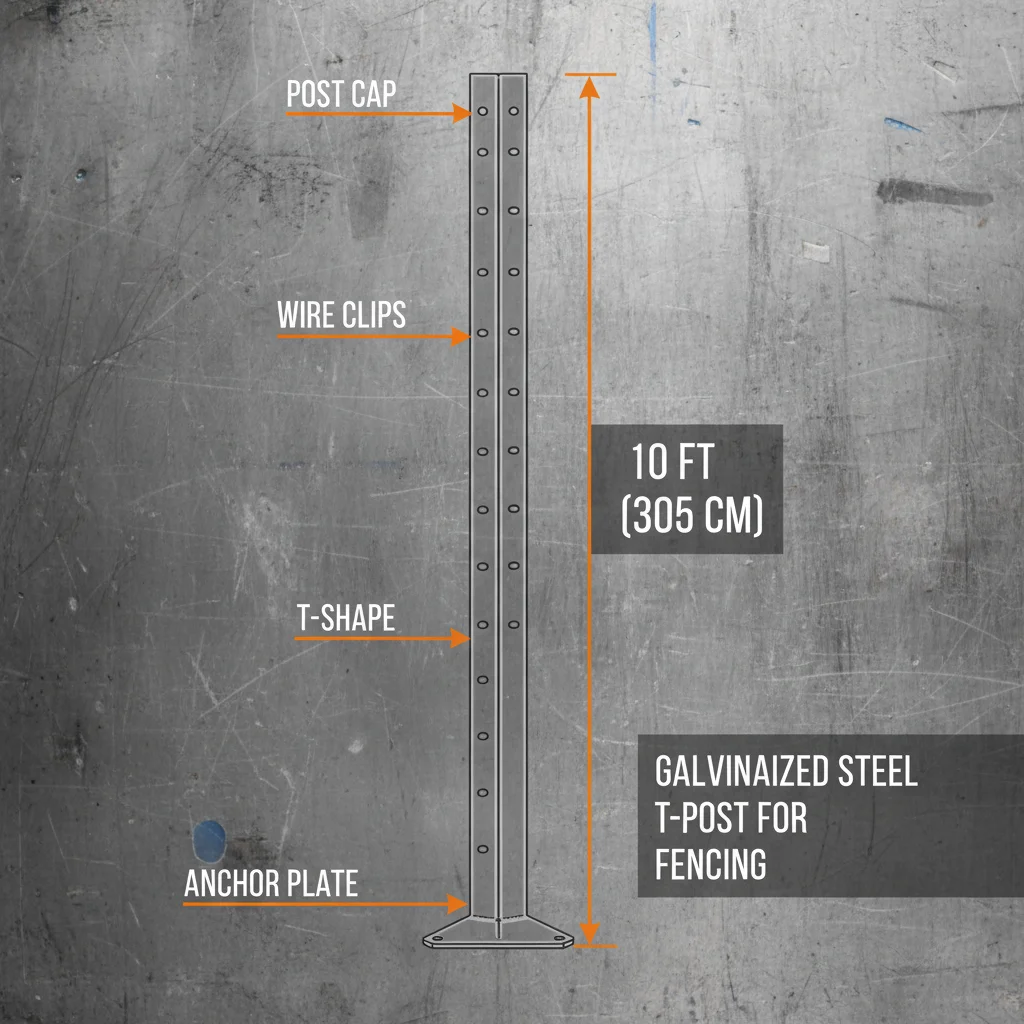
This analysis explores the technical requirements for selecting industrial-grade wire mesh and the critical role of supporting infrastructure. To ensure a stable installation, professionals often integrate these systems with specialized components like Diamond Wire Mesh supplier compatible support posts to maintain tension across varying terrains.

Structural Mechanics of Wire Mesh Systems

The integrity of a wire mesh system relies on the geometric stability of its weave. Diamond-patterned mesh is engineered to distribute mechanical stress evenly across the network, reducing the likelihood of localized deformation when under impact.
From an engineering perspective, the interaction between the wire diameter and the aperture size determines the overall rigidity. A professional Diamond Wire Mesh supplier ensures that the intersection points are secure, preventing the "unravelling" effect common in low-grade industrial netting.
Material Specifications and Coating Standards
Material selection begins with the base wire chemistry. Low-carbon steel is typically utilized for its balance of ductility and strength, allowing the mesh to be formed into precise diamond patterns without inducing micro-fractures in the metal grain.
Coating standards are the primary defense against oxidation. Hot-dip galvanizing provides a thick, metallurgical bond of zinc that protects the steel core, whereas electro-galvanizing offers a smoother finish suitable for less corrosive environments. The choice between these depends entirely on the site's salt spray exposure and humidity levels.
Beyond basic galvanization, advanced coatings like PVC or specialized polymers are often applied to enhance visibility or provide an additional chemical barrier. This multi-layered approach ensures that the product maintains its structural integrity over decades of outdoor exposure.
The Critical Trade-off: Tensile Strength vs. Flexibility
In fencing engineering, there is a constant tension between the need for a rigid barrier and the necessity of material flexibility to accommodate ground movement and thermal expansion.
This balance is further influenced by the support system. Utilizing high-strength Y-posts or similar rigid supports allows the mesh to be tensioned correctly, shifting the load from the wire itself to the anchored structural frame.
Performance Evaluation of Mesh Configurations
Evaluating the performance of different mesh configurations requires a normalized scoring system based on key engineering metrics: corrosion resistance, impact absorption, installation speed, and structural longevity.
Different configurations serve distinct purposes. While a light-duty weave is sufficient for crop protection, industrial security requires a heavy-duty configuration with higher wire gauges and reinforced knots.
Normalized Engineering Assessment of Mesh Types
Deployment Scenarios in Harsh Environments
In coastal regions, the presence of chloride ions accelerates the pitting corrosion of galvanized steel. In such scenarios, a standard Diamond Wire Mesh supplier product must be upgraded to high-zinc alloys or double-coated systems to prevent structural failure.
Similarly, in agricultural settings where livestock may apply significant lateral pressure, the integration of heavy-duty posts with reinforced mesh is mandatory. The synergy between the mesh's flexibility and the post's rigidity ensures the fence remains upright even under extreme animal impact.
Evolution of Galvanization Technologies
The industry is shifting toward "smart galvanization," where the zinc coating thickness is precisely controlled via automated sensors to ensure uniformity across the entire roll of mesh. This eliminates weak points where corrosion typically starts.
Moreover, the integration of electro-galvanizing followed by hot-dip galvanizing (known as Galfan or similar alloy coatings) has significantly extended the service life of industrial fences. These alloys provide superior edge protection, which is critical for cut-to-size mesh installations.
Future developments are focusing on graphene-enhanced coatings and self-healing polymers, which could potentially eliminate the need for manual rust treatment in the future, fundamentally changing how procurement managers evaluate long-term ROI.
Engineering Selection Matrix for Fencing
Selecting the right configuration requires a systematic comparison of intended use versus material capabilities. Buyers should not focus solely on the "supplier" label but on the technical data sheets.
The following matrix provides a framework for matching fence configurations to specific industrial and agricultural needs based on standard engineering profiles.
By aligning the load requirements with the appropriate wire gauge and coating, engineers can optimize both the budget and the lifespan of the installation.
| Configuration Type | Wire Specification | Corrosion Rating | Recommended Use Case |
|---|---|---|---|
| Basic Profile | Light Duty (0.85-1.10 lbs/ft) | Standard | Crop Protection / Boundary |
| Standard Profile | Medium Gauge | High | Residential / General Agriculture |
| High-Duty Profile | Heavy Duty (1.25-1.33 lbs/ft) | Very High | Industrial Perimeters / Livestock |
| Precision Profile | Fine Mesh / High Tensile | Medium | Specialized Security / Screening |
| Coastal Profile | Alloy Galvanized | Extreme | Marine / High-Salinity Areas |
| Industrial Baseline | Standard Galvanized | High | Warehouse / Commercial Fencing |
Technical FAQ
Hot-dip galvanizing involves immersing the wire in molten zinc, creating a thick, durable layer that is far superior for outdoor, high-corrosion environments. Electro-galvanizing uses an electrical current to apply a thinner, more uniform zinc layer, which provides a smoother aesthetic and is suitable for indoor or low-moisture applications. For long-term exterior use, hot-dip is the industry standard.
Determination depends on the expected impact load and the height of the fence. For high-security industrial zones, a heavy-duty gauge (e.g., 1.25-1.33 lbs/ft for support structures) is recommended. You must calculate the maximum lateral force the fence might encounter and ensure the tensile strength of the wire mesh exceeds this force by a safety factor of at least 1.5x.
Yes, the diamond weave is inherently more adaptable to terrain fluctuations than rigid welded mesh. However, the stability depends on the post system. Using adjustable or Y-shaped posts allows for better tensioning on slopes, ensuring that the mesh follows the contour of the land without creating gaps at the bottom of the fence line.
Sagging is usually a result of insufficient initial tension or inadequate post spacing. To prevent this, use high-tensile wire for the top and bottom rails and ensure that the support posts are deeply anchored. Regular inspections of the tensioning wires and the use of reinforced corner posts can further maintain the structural tautness of the system.
The first sign is "white rust," a powdery deposit of zinc oxide. If this progresses to "red rust," it indicates that the zinc layer has been completely depleted and the base steel is oxidizing. Once red rust appears, the structural integrity of the wire is compromised, and the section should be treated or replaced to avoid total fence failure.
Evaluate suppliers based on their production capacity, coating certifications, and material traceability. Ask for the specific zinc coating weight (g/m²) and the tensile strength tests of the base wire. A reputable supplier will provide technical data sheets and evidence of quality control processes rather than general marketing claims.
Engineering Summary and Implementation
The efficiency of any perimeter security system is a direct result of the synergy between material science and structural engineering. By prioritizing high-zinc coatings and precise tensile grades, operators can significantly reduce the total cost of ownership through extended maintenance cycles and increased reliability.
For those designing large-scale installations, the focus must remain on the integration of the mesh with robust supports. Implementing a system from a specialized Diamond Wire Mesh supplier ensures that the boundary remains secure, durable, and compliant with industrial safety standards across all environmental conditions.