- romanian
- korean
- kyrgyz
- lao
- latin
- latvian
- malay
- malayalam
- marathi
- persian
- polish
- portuguese
- quechua
- khmer
- russian
- shona
- singapore
- spanish
- swahili
- swedish
- tajik
- thai
- ukrainian
- urdu
- vietnamese
- filipino
- azerbaijani
- bengali
- burmese
- catalan
- creole
- croatian
- czech
- danish
- deutsch
- dutch
- english
- estonian
- arabic
- finnish
- french
- greek
- gujarati
- hausa
- hindi
- hungarian
- igbo
- indonesian
- irish
- italian


Understanding the Versatility and Importance of Studded TPost in Modern Applications
Studded T-Post, you see it everywhere – fencing farms, marking boundaries, even temporary construction sites. But it's more than just a metal post hammered into the ground. I spend my days on job sites, talking to the guys actually putting this stuff in, and what they need isn’t just cheap, it’s reliable. It needs to withstand weather, accidental impacts, and frankly, just plain abuse. Understanding what makes a good Studded T-Post, and how it’s evolved, impacts everything from agricultural efficiency to the speed of disaster relief. It's a surprisingly complex little piece of metal.
We're seeing a growing demand, globally, for efficient and durable fencing solutions. Think about the expansion of agricultural land in developing countries, the need for secure perimeters in infrastructure projects, and the increasingly frequent deployment of temporary fencing for events and emergency situations. The UN estimates that over 828 million people are affected by food insecurity – efficient farming, and protecting livestock, relies on solid fencing. And when disaster strikes, getting boundaries established quickly is crucial for aid distribution and security. The demand isn’t slowing down.
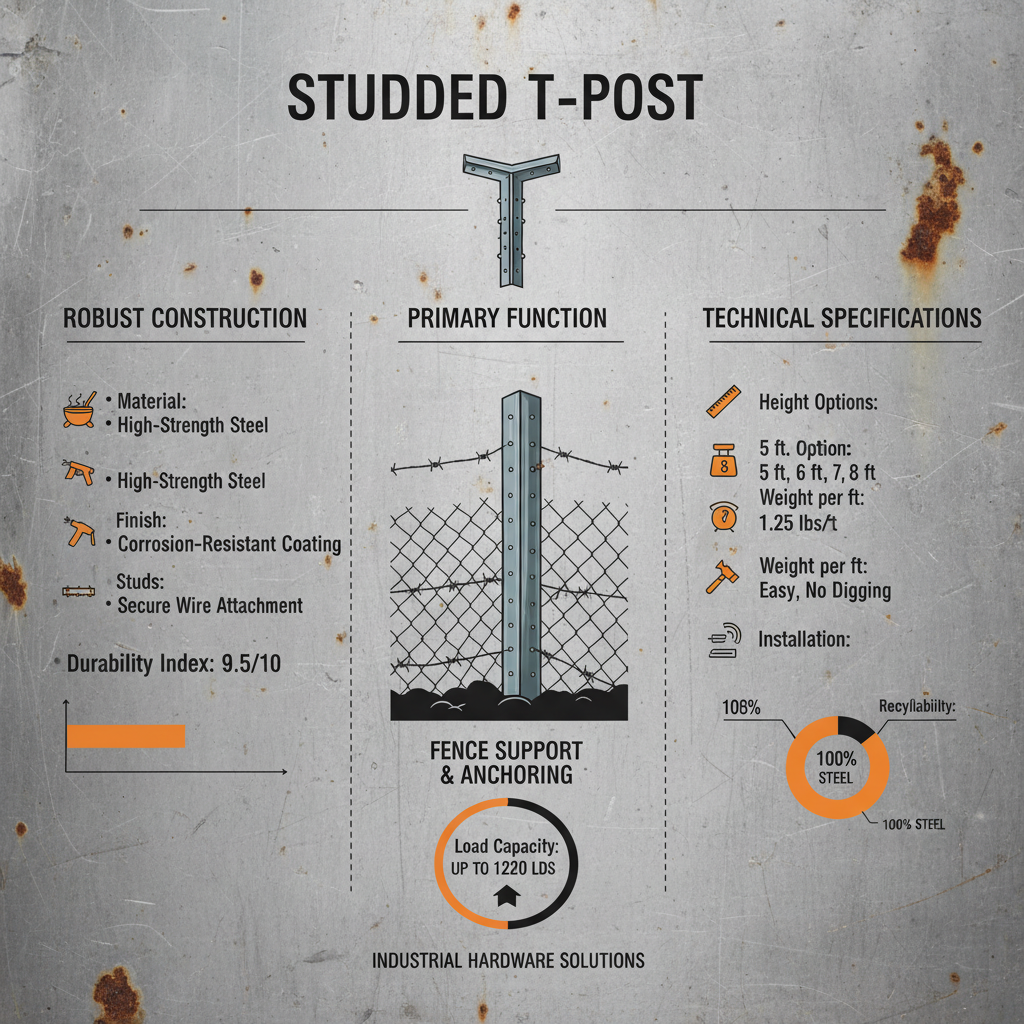
Simply put, a Studded T-Post is a metal post, typically steel, formed into a ‘T’ shape and covered with studs (or spikes) welded along its length. These studs are the key – they provide grip when driven into the ground, eliminating the need for concrete or extensive digging. It’s a far cry from traditional wooden posts, which rot, require constant maintenance, and are just… slower. This isn’t just about replacing wood though; it’s about improving efficiency and reducing long-term costs in a world demanding both.
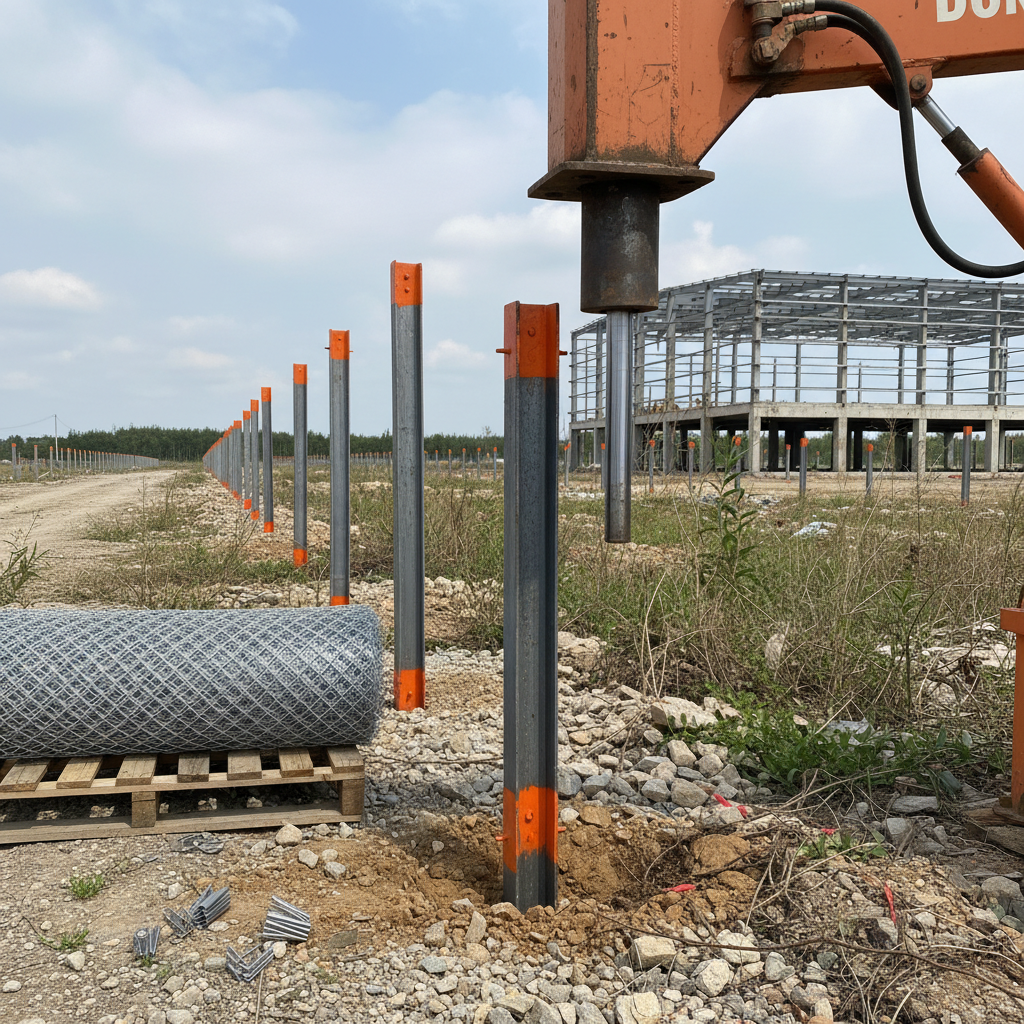
The Importance of Studded T-Post in Modern Infrastructure
I’ve seen firsthand how vital these posts are to everything from securing livestock in remote Australian outback stations to defining temporary perimeters for construction projects in bustling city centers. What impresses me is the consistency. A good Studded T-Post delivers the same level of performance regardless of the environment. The sheer volume of these being used, globally, underlines how essential they’ve become.
You look at the data - the global fencing market is projected to reach over $30 billion by 2028 (Source: Grand View Research). A significant portion of that is driven by the demand for durable, easy-to-install solutions like Studded T-Posts. It’s not just about the initial cost, but the total cost of ownership: less maintenance, longer lifespan, and reduced labor requirements all contribute to significant savings in the long run.
FAQS
Driving Studded T-Post into hard ground requires a specialized driver or a heavy-duty sledgehammer. Using a driver is significantly easier and more efficient, reducing the risk of bending the post. For a sledgehammer, strike the top of the post squarely and repeatedly, rotating the post slightly with each strike. Pre-soaking the ground can sometimes help, but it’s not always practical. Consider using a pilot hole if the ground is extremely rocky.
Rust prevention starts with the quality of the galvanization. Look for posts with a thick, uniform coating. Avoid scratching or damaging the coating during installation. In coastal areas or industrial environments, consider using posts with a powder coating for extra protection. Regularly inspecting posts and applying a rust inhibitor can also extend their lifespan. Remember, preventing rust is cheaper than replacing posts.
The recommended spacing depends on the type of fencing material and the terrain. For standard woven wire, 8-10 feet is generally sufficient. For barbed wire, 10-12 feet is common. In hilly or uneven terrain, you may need to reduce the spacing to maintain a consistent fence line. Always check local regulations and consider the specific needs of your application.
While often used for temporary fencing, Studded T-Posts can be suitable for permanent fencing, provided you use high-quality posts with a robust coating and proper bracing. However, they are generally not as strong or durable as traditional wood or concrete posts, especially in areas prone to extreme weather or heavy animal pressure. For a long-lasting permanent fence, investing in more substantial posts is often worthwhile.
For sheep fencing, a medium-weight Studded T-Post (typically around 1.9 meters in length and 1.25 inches in diameter) is usually sufficient. The goal is to provide enough height and strength to contain the sheep without allowing them to jump over or push through the fence. Proper spacing, as mentioned previously, is also crucial. It's always better to err on the side of caution and use a slightly heavier post if you’re unsure.
Removing a deeply embedded Studded T-Post can be challenging. A post puller is the most effective tool for this task. It utilizes leverage to extract the post straight up. If you don't have a post puller, you can try using a high-lift jack and a chain or strap to lift the post. Be careful not to bend the post during removal. If it's extremely stubborn, you may need to dig around the post to loosen the soil.
Conclusion
Studded T-Post is a deceptively simple, yet incredibly versatile, solution to a wide range of fencing and boundary-marking needs. Its cost-effectiveness, ease of installation, and durability make it a staple on construction sites, farms, and in disaster relief efforts around the globe. Understanding the nuances – from steel grade to coating quality – is essential for maximizing its performance and longevity.
Looking ahead, innovation in materials and design will continue to improve the sustainability and efficiency of Studded T-Posts. Investing in quality posts and proper installation techniques will remain crucial for long-term success. If you're looking for reliable and cost-effective fencing solutions, explore our range of Studded T-Posts today. Visit our website for more information.