- romanian
- korean
- kyrgyz
- lao
- latin
- latvian
- malay
- malayalam
- marathi
- persian
- polish
- portuguese
- quechua
- khmer
- russian
- shona
- singapore
- spanish
- swahili
- swedish
- tajik
- thai
- ukrainian
- urdu
- vietnamese
- filipino
- azerbaijani
- bengali
- burmese
- catalan
- creole
- croatian
- czech
- danish
- deutsch
- dutch
- english
- estonian
- arabic
- finnish
- french
- greek
- gujarati
- hausa
- hindi
- hungarian
- igbo
- indonesian
- irish
- italian


High Performance Guardrail Post for Global Infrastructure Safety
The structural integrity of modern transportation and industrial safety relies heavily on the quality of a Guardrail Post. As global infrastructure expands, the demand for robust, corrosion-resistant support systems has transitioned from a simple utility to a critical safety requirement. Understanding the nuances of post design and material science is essential for reducing road fatalities and securing hazardous industrial perimeters.
Across the globe, the deployment of high-performance Guardrail Post systems is governed by rigorous international standards, such as ISO and AASHTO, to ensure consistent energy absorption during impacts. These components are not merely metal poles; they are engineered safety devices designed to redirect vehicles and protect pedestrians, making their selection a matter of public safety and liability management.
For engineers and procurement specialists in the metal products industry, balancing cost-efficiency with long-term durability is the primary challenge. By leveraging advanced galvanization techniques and high-strength steel alloys, a modern Guardrail Post can withstand extreme environmental stressors while maintaining the necessary flexibility to prevent catastrophic failure during a collision.
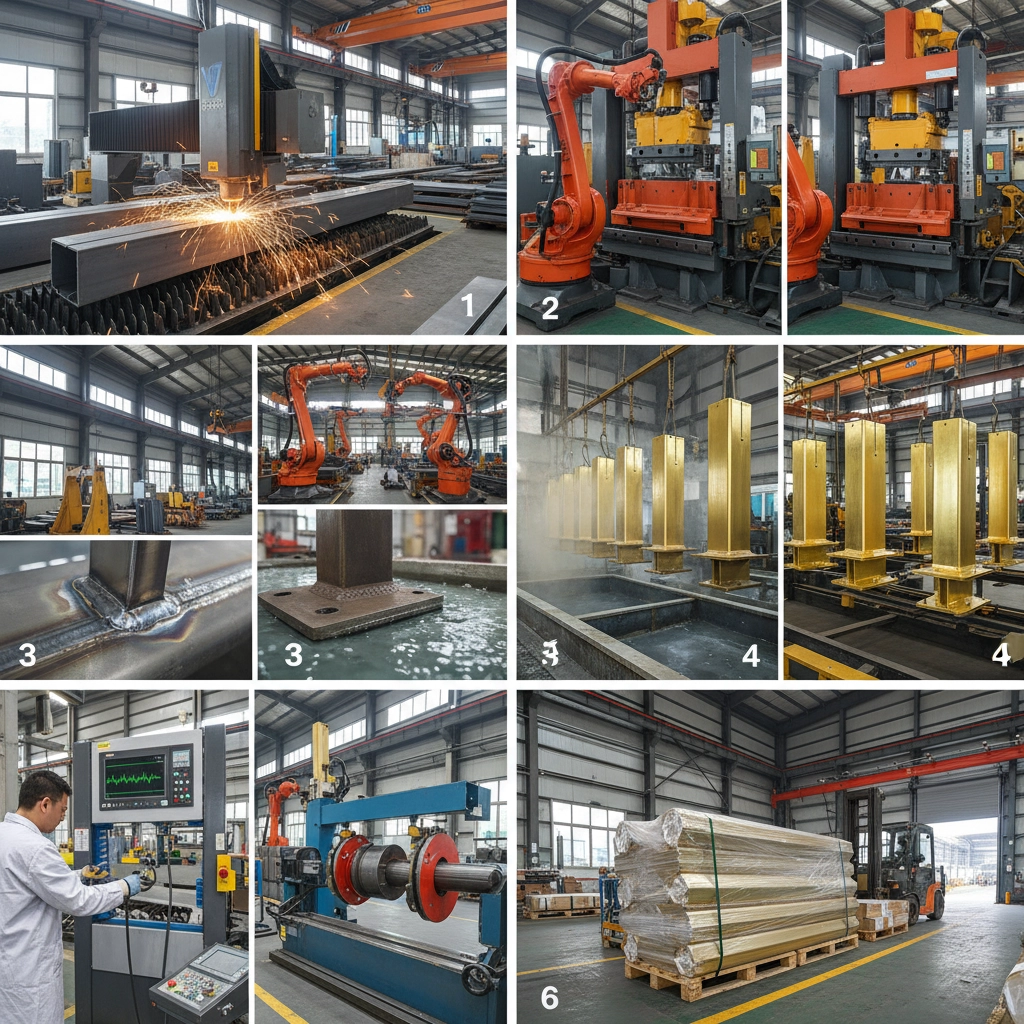
Global Infrastructure and Guardrail Post Relevance

In the context of rapid urbanization and the expansion of highway networks in developing economies, the Guardrail Post serves as the foundational anchor for road safety. Statistical data from international transport forums suggest that correctly installed guardrail systems can reduce the severity of road departures by up to 40%, highlighting the critical nature of post strength and spacing.
Furthermore, the global shift toward "Smart Cities" requires infrastructure that is not only strong but also sustainable. This has led to a surge in demand for posts that utilize recycled steel and low-emission coating processes, ensuring that safety measures do not come at the expense of environmental health.
FAQS
A rigid post is designed to stop a vehicle completely, typically used in areas where a vehicle must not cross the barrier at any cost. A break-away post is engineered to shear off or collapse upon a specific impact force, reducing the sudden deceleration of the vehicle and minimizing the risk of severe passenger injury.
Hot-dip galvanization creates a metallurgical bond between the zinc and the steel. This not only prevents oxygen and moisture from reaching the steel core but also provides cathodic protection—where the zinc corrodes preferentially to the steel—extending the post's lifespan significantly in harsh outdoor environments.
Generally, any post that has undergone structural deformation should be replaced. Even a slight bend in a Guardrail Post compromises its ability to absorb energy in a future impact, which could lead to the barrier failing during a more severe accident. Safety standards usually dictate immediate replacement.
Spacing is determined by the rail's tensile strength and the expected impact speed. Shorter spacing increases the rigidity of the barrier, while wider spacing allows for more rail deflection. Engineers balance these factors to ensure the barrier redirects the vehicle without allowing it to "pocket" or break through the rail.
Yes, composite polymer posts and recycled-content steel are becoming more common. These materials offer excellent corrosion resistance without the need for heavy chemical coatings, reducing the overall environmental impact while maintaining the structural requirements for road and industrial safety.
Verification involves checking for certifications such as MASH (Manual for Assessing Safety Hardware) or EN 1317. You should request Mill Test Reports (MTRs) from the manufacturer to verify the steel grade and galvanization thickness, and perform on-site pull tests to ensure correct installation depth.
Conclusion
The Guardrail Post is a cornerstone of modern safety engineering, bridging the gap between raw material strength and life-saving performance. From the careful selection of galvanized steel to the implementation of break-away designs, every detail contributes to a system that protects lives and secures critical infrastructure globally. By focusing on durability, precision installation, and material innovation, industries can ensure that these barriers remain reliable for decades.
As we move toward a future of smarter, greener infrastructure, the evolution of the Guardrail Post will continue to integrate digital monitoring and sustainable materials. We encourage procurement officers and engineers to prioritize certified, high-quality components to minimize long-term risk and maintenance costs. For industry-leading safety solutions and high-performance metal products, visit our website: www.huaxinmesh.com.
Related Posts