


High Strength Y Steel Post Cost Analysis for Security Fencing
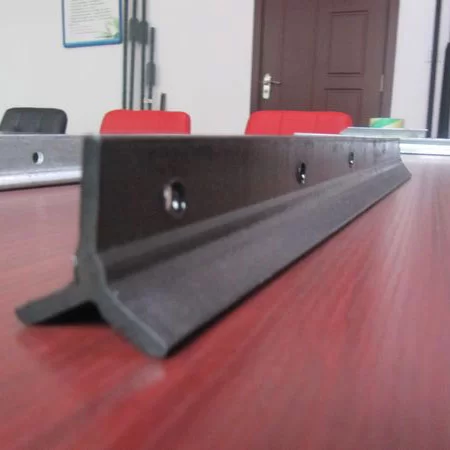
Perimeter containment budgets for industrial security and agricultural fencing projects are determined by lifecycle economics rather than upfront purchase prices.
Evaluating high-strength Y steel posts requires balancing upfront acquisition outlays against long-term operational horizons across agricultural and security fencing environments.
Procurement managers and project engineers examine these initial costs against expected operational lifespans before finalizing supplier contracts.
Relevant manufacturing consistency documentation is available from the supplier to support this evaluation.
Upfront Acquisition Expenses Versus Long-Term Replacement Cycles
Capital Allocations and Material Lifecycle Balances
Initial material acquisition expenses of high-strength steel posts function as capital investments weighed against frequent replacement cycles in demanding environments. Procurement managers evaluate upfront costs rather than focusing solely on immediate line-item purchase prices when budgeting for agricultural and security fencing installations. Long-term operational horizons dictate that boundary markers must withstand environmental stress without recurring repair expenditures.
Timber boundary elements present lower purchase invoices, yet their susceptibility to moisture and rotting introduces continuous replacement labor. Concrete posts resist initial weathering but remain vulnerable to structural cracking under severe freeze-thaw cycles across remote project sites. Project engineers verify material parameters through direct technical file reviews before finalizing purchase orders.
Operational Longevity of Boundary Containment Infrastructure
Project engineers compare the durability of steel boundary markers against traditional alternatives over extended operating periods. Robust steel elements mitigate recurring replacement burdens by maintaining structural integrity in moist and corrosive conditions. Production batch records validate the uniformity of surface treatments applied to boundary posts across distinct manufacturing runs.
Total Cost of Ownership Modeling Over a 10-to-20-Year Horizon
Long-Term Financial Modeling Across Extended Operational Horizons
Total cost of ownership models factor in post replacement frequency over a 10-to-20-year operational horizon by comparing upfront material outlays against recurring maintenance interventions. Project scales and regional climatic exposure dictate how quickly traditional containment structures degrade under environmental stress. Boundary markers in agricultural and industrial security deployments accumulate distinct financial footprints depending on material selection.
Emergency fence repairs in remote livestock enclosures demand dedicated labor deployments that frequently surpass initial material savings. Deferred maintenance savings offset initial financial outlays for industrial security fencing budgets when robust materials prevent unexpected structural failures.
Lifecycle Cost Distribution Across Material Variants
Labor maintenance expenses in boundary marker lifecycle calculations for large perimeter projects depend on prevailing regional wages and site accessibility variables.
| material | application |
|---|---|
| high-quality steel | Agricultural & Security Fencing |
| Alternative A (Timber) | livestock enclosures |
| Alternative B (Concrete) | industrial security |
Operational Maintenance Interventions
Sustained environmental exposure tests the structural integrity of boundary markers over extended operational cycles. Timber elements require periodic biological treatments and frequent sectional replacements, whereas concrete barriers demand heavy machinery when shifting soils compromise alignment. Steel containment solutions minimize recurring labor interventions across damp or corrosive environments.
Optimizing Freight and Volume Expenses Through Direct Factory Negotiations
Direct Factory Engagement and Supply Chain Stability
Metal products industry buyers source perimeter containment materials through direct factory negotiations to bypass intermediaries and reduce procurement overhead. Direct manufacturer engagement impacts supply chain predictability for large-scale security fencing projects by securing dedicated production slots before seasonal demand peaks occur.
Purchasing teams evaluate factory inspection summaries and production batch records during initial supplier vetting to confirm manufacturing consistency across large volume orders. Lead times and delivery schedules depend heavily on raw material availability and container scheduling constraints at origin ports.
Freight Optimization for Bulk Steel Post Orders
Evaluating strategies to optimize freight logistics and bulk volume expenses when ordering steel posts from China requires careful calculation of container payload limits and ocean freight rate fluctuations. Maritime transport efficiency increases when cargo weight reaches optimal threshold levels within standard dry van equipment before dispatch.
Port handling fees, seasonal bunkering surcharges, and destination port tariffs influence the total delivered cost per linear meter of boundary markers. Freight logistics planning relies on order volumes, seasonal carrier capacity, and prevailing destination port rates to prevent unexpected transportation overruns.
Structural Post Configurations for High-Tension Security Fencing
Engineering Requirements for High-Tension Perimeter Systems
Agricultural boundaries and secure livestock containment enclosures depend directly on post geometry to prevent boundary failure under continuous lateral force. Wire tensile ratings dictate whether a cross-section resists inward deflection across varying installation span lengths.
Sustained pressure from high-tensile mesh or barbed wire requires supporting components with sufficient section modulus to absorb the load without permanent deformation in remote project sites.
Aligning Post Selection with Wire Tensile Thresholds
Mechanical stability in agricultural and security fencing relies on matching post rigidity with the specific tension of the installed wire. High-tension wire systems generate continuous bending moments that cause structural failure in undersized boundary markers.
Soil density, local wind load variables, and livestock pressure vectors determine the required yield strength before project engineers finalize material orders.
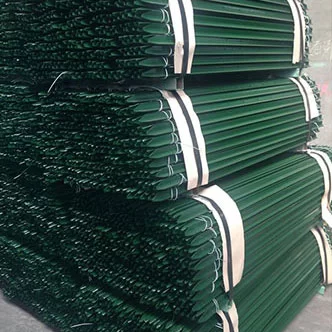
Rigid metal sections eliminate the deflection commonly observed in alternative boundary materials during heavy operational use across demanding terrain conditions.
Financial Comparison Between Steel Posts and Alternative Materials
Financial Evaluation of Perimeter Containment Options
Per-meter acquisition expenditures vary according to purchase volume, order complexity, and final destination port requirements. Project estimators contrast these initial outlays against traditional containment materials to determine long-term operational feasibility.
Timber boundary installations frequently present lower invoice totals upon delivery, yet rapid moisture degradation introduces recurring replacement labor. Concrete alternatives resist weathering more effectively than timber, but their brittle nature renders them vulnerable to structural cracking under shifting soil loads and heavy mechanical impacts.
Qualitative Performance and Maintenance Metrics
Lifecycle models indicate that steel boundary markers maintain structural integrity in moist environments due to protective surface treatments, whereas organic materials require continuous upkeep. Maintenance schedules for alternative boundary media depend heavily on local climate severity and soil composition across remote installation zones.
| Material Option | Application | Suitability for Humid Environments |
|---|---|---|
| High Strength Y Steel Posts | Agricultural & Security Fencing | Maintains structural retention with protective surface finish |
| Timber Posts | Livestock enclosures | Prone to moisture degradation and requires frequent replacement |
| Concrete Posts | Standard boundary markers | Resistant to moisture but susceptible to cracking under shifting loads |
Procuring teams balance qualitative maintenance intervals against upfront material acquisition costs to prevent premature budget depletion. Comprehensive purchasing strategies incorporate both immediate invoice pricing and long-term labor requirements when evaluating large-scale boundary containment projects.
Budget Allocation and Procurement Planning for Perimeter Projects
Capital Allocation Strategies for Perimeter Containment
Project engineers establish financial frameworks by balancing upfront capital outlays against extended maintenance horizons for large-scale agricultural and security perimeters. Capital allocation models weigh initial material acquisition expenses alongside projected replacement intervals to prevent unexpected operational budget deficits over multi-year cycles.
Purchasing teams evaluate regional climate exposure and expected degradation rates before finalizing initial order volumes. Varying environmental stressors across target installation sites dictate whether supplementary surface treatments are required to extend the service life of boundary components.
Integrating Quality Documentation Into Procurement Workflows
Procuring industrial security fencing requires systematic reviews of verified manufacturing records and factory inspection summaries during supplier evaluation workflows. Quality verification protocols depend on structured factory audits rather than unverified regulatory claims, ensuring that delivered materials meet exact dimensional requirements.
Import managers coordinate directly with factory quality assurance leads to verify manufacturing consistency prior to container loading. Target market import requirements and destination customs clearance rules determine which specific documentation packages must accompany each shipping container.
Financial Risk Mitigation for Bulk Orders
Financial risk mitigation relies on establishing direct factory communications to coordinate shipping schedules and volume requirements for extensive boundary installations. Procurement leads protect capital investments by securing detailed quotation breakdowns and validating production batch records before authorizing final payment releases.
Supply chain predictability improves when purchasing schedules align directly with manufacturing capacity and ocean freight booking windows. Direct manufacturer engagement ensures that large-scale perimeter containment orders arrive on schedule without incurring unexpected demurrage or storage penalties at the destination port.
Frequently Asked Questions
High-quality steel minimizes recurring replacement expenditures in damp environments. Timber boundary elements often incur continuous labor costs due to moisture susceptibility, whereas steel maintains structural integrity without frequent manual interventions.
Importers leverage direct factory negotiations to secure favorable wholesale pricing and consolidate container loads. Freight efficiency depends heavily on order volume thresholds and prevailing destination port logistics variables.
Correct structural matching prevents premature failure under heavy operational loads and wire tension. Choosing the appropriate post profile ensures boundary stability across agricultural and industrial perimeters without structural deformation.
Uniform surface treatments protect steel elements against accelerated environmental degradation in corrosive outdoor conditions. Buyers verify manufacturing quality through factory inspection summaries rather than relying on unverified coating measurements.
Engineers review production batch records and verify material uniformity across distinct manufacturing runs before dispatch. Direct manufacturer engagement ensures supply chain predictability and aligns delivery schedules with project timelines.
Conclusion
Procurement leads complete final supplier reviews by requesting detailed quotation breakdowns and verified production batch records directly from factory channels. Establishing transparent pricing structures ensures landed costs align with initial capital allocations before purchase orders are issued.
Direct communication with manufacturing facilities helps project engineers verify output capacities and delivery timelines. This final operational step secures reliable supply chains for large-scale agricultural and security fencing installations.


